Best Fundraising Ideas for Small Nonprofits With Few Volunteers
Small nonprofit fundraising
Best Fundraising Ideas for Small Nonprofits With Few Volunteers
The best fundraising ideas for small nonprofits are the ones a small team can repeat without burning out. That usually means simple setup, clear messaging, online giving options, and fewer moving parts.
Small nonprofits often do important work with very little extra help. One person may be answering messages, planning programs, calling donors, posting online, and trying to keep fundraising moving at the same time. A good fundraising plan should respect that reality.
If your nonprofit is small, the goal is not to copy what large organizations do. Big galas, auctions, walkathons, and multi-week sales can work for some groups, but they often depend on large committees, donated venues, ticket sales, silent auction items, registration systems, and many volunteer hours.
This guide focuses on practical fundraising ideas for small nonprofits that need realistic options. You can use these ideas for animal rescues, local charities, youth programs, churches, community groups, arts organizations, food support programs, neighborhood projects, and volunteer-led nonprofits.
What Small Nonprofits Should Look For in a Fundraiser
Before choosing a fundraiser, look at the true cost behind the idea. A fundraiser that sounds profitable can become stressful if it needs too much time, too many supplies, or too many volunteers.
A small team should be able to launch the fundraiser without weeks of planning, meetings, or design work.
People should understand what to do in a few seconds: donate, share, sponsor, join monthly support, or buy through a link.
The fundraiser should make thank-you messages, updates, receipts, and next steps manageable.
Avoid paying large upfront costs unless you already have committed support or a clear budget.
Best Fundraising Ideas for Small Nonprofits
1. Monthly Giving Program
A monthly giving program is one of the strongest options for small nonprofits because it turns occasional support into predictable support. Instead of asking people for a large gift once, invite them to give a smaller amount each month.
This works especially well when you connect the monthly amount to something specific. For example, a $10 monthly gift may help provide program supplies, transportation support, rescue care, classroom resources, outreach materials, or other everyday needs depending on your mission.
Keep the invitation simple. Give people three suggested levels, explain what each level helps support, and send occasional updates so supporters feel connected to the work.
2. Short Email Appeal
Email fundraising can be very effective for a small nonprofit because it does not require a venue, printed materials, or a large volunteer team. The key is to avoid long, vague messages. A strong email appeal names the need, explains why it matters now, and gives one clear action.
Simple structure:
1. What is happening?
2. Who does it affect?
3. What amount or action would help?
4. Where should the supporter click?
If you need help writing the actual message, use the guide on how to write a fundraising message once that post is published, or draft a short message around one clear need.
3. Text Message Fundraising
Text messages work best when supporters already know your organization. A short text can remind board members, past donors, families, volunteers, and close community supporters that your fundraiser is active.
Keep it personal and respectful. Do not over-message people. One launch message and one reminder is often enough for a simple campaign.
Example: Hi [Name], we are raising support for [specific need] this week. If you are able, here is the link to help: [link]. Even sharing it with one person would mean a lot.
4. Sponsor-a-Need Campaign
A sponsor-a-need campaign gives supporters a specific item or outcome to fund. This can be easier than asking for a general donation because people can picture exactly what their support helps provide.
- Sponsor one student supply kit
- Sponsor one week of program snacks
- Sponsor transportation for one participant
- Sponsor care supplies for one rescue animal
- Sponsor one music, art, or sports participation cost
This idea works best when the nonprofit can explain the need clearly and thank supporters with a short update afterward.
5. Online Wish List
An online wish list is useful when your organization needs supplies more than cash. A small nonprofit can list items such as paper goods, cleaning supplies, program materials, snacks, hygiene items, pet supplies, classroom tools, or office basics.
The advantage is that supporters can help in a concrete way. The challenge is that wish lists do not always cover rent, insurance, transportation, staffing, or other flexible expenses. Use this idea when supply needs are real, but do not rely on it as your only fundraising plan.
6. Board Member Giving and Sharing Challenge
If your nonprofit has a board, start with a small board challenge before asking the wider community. This does not need to be uncomfortable. Each board member can choose one action that fits them: make a gift, send three personal messages, introduce one sponsor, or share a campaign update.
A small board challenge gives your fundraiser early momentum. It also prevents the common problem where the organization asks the public before its closest leaders have participated.
7. Local Business Sponsorships
Local business sponsorships can work well for small nonprofits when the request is specific and the benefit is simple. Instead of asking a business to “support us,” ask if they would sponsor one program need, one event cost, one matching challenge, or one month of community outreach.
Offer practical recognition: a thank-you post, logo on a flyer, a mention in an email update, or a sponsor listing on your website. Keep your promise manageable so recognition does not become another large project.
8. Matching Gift Challenge
A matching gift challenge gives donors a reason to act now. One supporter, board member, family, or business agrees to match donations up to a set amount. Then the nonprofit invites the community to help unlock the match.
For a small nonprofit, the match does not need to be huge. A $250, $500, or $1,000 match can still create urgency if the message is clear.
9. Small Community Event
Events can help small nonprofits, but only when the event is simple enough for the team available. A coffee morning, open house, donation day, community class, bake table, yard sale, or small benefit night can work better than a large gala if volunteer capacity is limited.
Choose events where the venue, food, setup, cleanup, and payment process are easy. If the event requires five committees to function, it may be too much for a low-staff organization.
10. Peer Sharing Campaign
Peer sharing means your supporters help spread the fundraiser through their own networks. This can be powerful for a small nonprofit because one staff member or volunteer does not have to reach everyone alone.
Give supporters a short message they can send by text, email, or social media. The easier you make sharing, the more likely people are to actually do it.
11. Recurring Product-Based Fundraiser
Some small nonprofits want an option that does not depend only on direct donations. A recurring product-based fundraiser may fit when supporters already buy the type of product being offered, the process is online, and the nonprofit does not have to store inventory or manage deliveries.
Healthy Fundraiser Hub focuses on wellness-based fundraising options because many families already purchase everyday wellness products. If your group is exploring that route, compare it with traditional fundraising using the how it works overview and the LiveGood fundraiser review. For organizations that prefer no inventory, no candy, and no cash collection, this may be worth reviewing alongside other options.
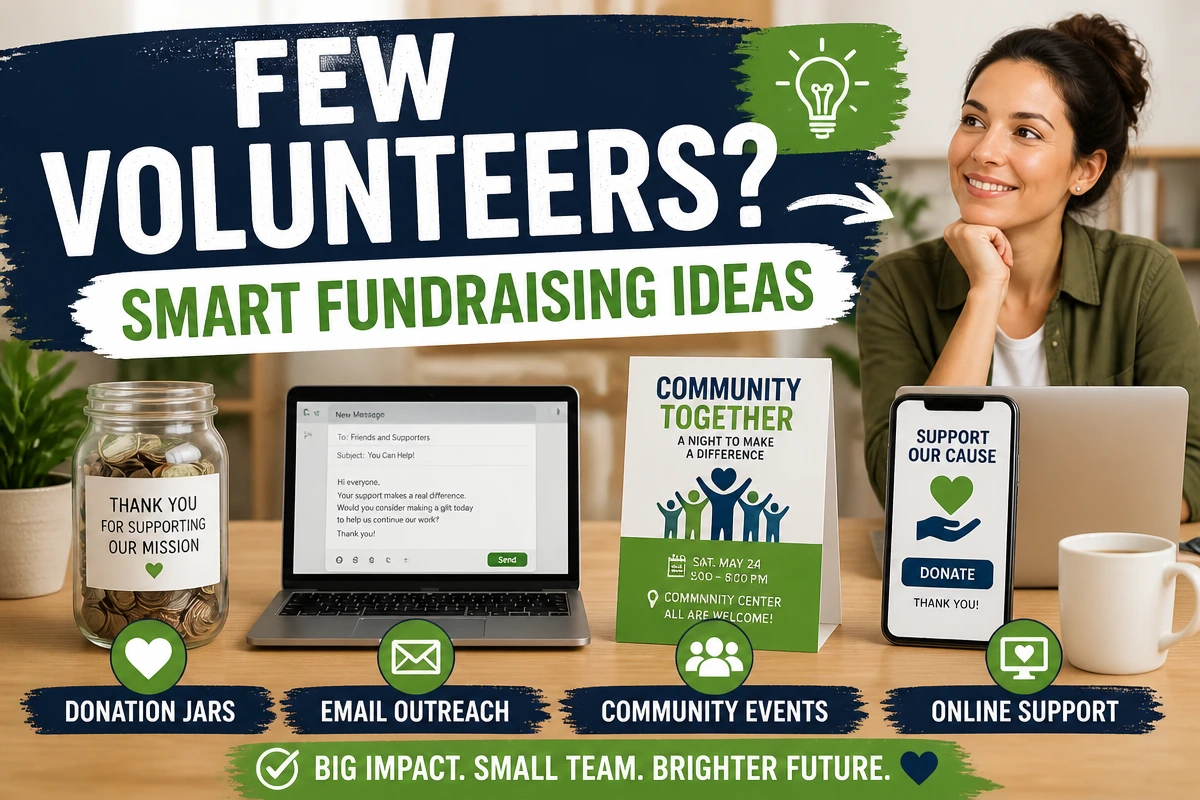
Small nonprofits usually need fundraising ideas that reduce volunteer work, not add more of it.
Comparison Table: Which Fundraiser Fits a Small Nonprofit?
| Fundraising idea | Volunteer effort | Best for | Watch out for |
|---|---|---|---|
| Monthly giving | Low after setup | Predictable support | Needs regular updates |
| Email appeal | Low | Fast campaign launch | Weak results if the message is vague |
| Text message ask | Low | Close supporters | Can feel pushy if overused |
| Sponsor-a-need | Low to medium | Specific program costs | Needs clear cost examples |
| Wish list | Low | Supply needs | May not cover flexible expenses |
| Business sponsorship | Medium | Community visibility | Requires personal outreach |
| Small event | Medium to high | Local connection | Venue, setup, and cleanup can grow |
| Online product fundraiser | Low to medium | No-inventory fundraising | Supporters need a clear explanation |
A Simple 30-Day Fundraising Plan for a Small Nonprofit
If your team is small, do not launch five ideas at once. Pick one main fundraiser and one support activity. Here is a simple 30-day structure.
Pick one clear goal. Write down who benefits, what amount is needed, and why the timing matters.
Send the first message to board members, volunteers, past donors, families, and close community friends.
Post the fundraiser, email your list, share a simple graphic, and ask supporters to forward the message.
Share progress, send one reminder, thank donors, and explain what their support helped make possible.
What to Avoid When You Have Few Volunteers
Some fundraisers are not bad, but they may be wrong for a small team. Be careful with ideas that require too much coordination before the money comes in.
- Large auctions with many donated items to track
- Events that need food permits, ticketing, staffing, decorations, and cleanup crews
- Fundraisers that require product storage, order sorting, or delivery routes
- Campaigns where one person has to chase every donor manually
- Ideas that are hard to explain in one sentence
Small nonprofits do not need complicated fundraising to be taken seriously. Clear, consistent, practical fundraising often works better than an impressive idea that exhausts the team.
How to Choose the Right Idea
Use these questions before choosing your next fundraiser:
- Can we explain this fundraiser in one sentence?
- Can we launch it with the people we already have?
- Does it require upfront spending?
- Will supporters understand why this matters now?
- Can we thank people and report back easily?
- Does this idea help us build future support, or only a one-time push?
If the answer is unclear, simplify the idea. A smaller campaign that gets finished is better than a bigger campaign that never launches.
Where to Go Next When Comparing Fundraisers
For a wider list of fundraising options, start with the main fundraiser ideas guide. If your nonprofit serves schools or youth programs, the healthy school fundraising ideas page and school fundraising without candy guide may also help. For national planning, see fundraising ideas in the USA.
How Small Nonprofits Can Work With an Online Fundraiser
An online fundraiser can help a small nonprofit reduce volunteer workload because supporters can participate from a phone, email, QR code, or shared link. It is most useful when the nonprofit has one clear message and one person responsible for updates.
Use online fundraising to support, not replace, relationship building. Ask close supporters first, give volunteers copy-and-paste messages, then share publicly after there is some early momentum.
Extra Tips for Small Nonprofits With Few Volunteers
- Choose one main fundraiser and one backup idea, not five ideas at once.
- Use a simple spreadsheet or donor tool to track follow-up.
- Ask board members for introductions, not only donations.
- Create one thank-you message before the campaign begins.
- Stop any idea that needs more volunteer hours than the team can give.
FAQ: Fundraising Ideas for Small Nonprofits
What is the easiest fundraiser for a small nonprofit?
The easiest fundraiser is usually a short email or text appeal to people who already know the organization. It requires no venue, no inventory, and no complicated setup. Monthly giving is also simple once the donation page and message are ready.
How can a small nonprofit fundraise with no budget?
Start with free or low-cost options: personal messages, email appeals, social sharing, wish lists, board member outreach, sponsor-a-need campaigns, and matching gift challenges. Avoid fundraisers that require buying products, renting venues, or printing large amounts of material upfront.
Are events worth it for small nonprofits?
Events can be worth it when they are small, easy to manage, and connected to your mission. Large events can take more time than they return, especially when volunteer help is limited.
What should a small nonprofit ask donors to support?
Ask donors to support a clear need: supplies, transportation, program costs, outreach, emergency support, scholarships, care expenses, or monthly operating support. Specific needs are easier for supporters to understand than general requests.
How often should a small nonprofit ask for donations?
There is no perfect number, but consistency matters. Many small nonprofits do better with a few clear campaigns each year, regular updates between campaigns, and a simple monthly giving option available all year.
Can small nonprofits use online fundraising?
Yes. Online fundraising can be a good fit because supporters can give or participate from anywhere. The fundraiser still needs a clear message, simple link, and regular follow-up so people know why their support matters.
Looking for a no-inventory fundraiser to compare?
If your nonprofit wants to review an online wellness fundraiser with no product storage, no delivery nights, and no cash collection, you can look at the presentation and decide if it fits your group.
View the Fundraising Presentation